
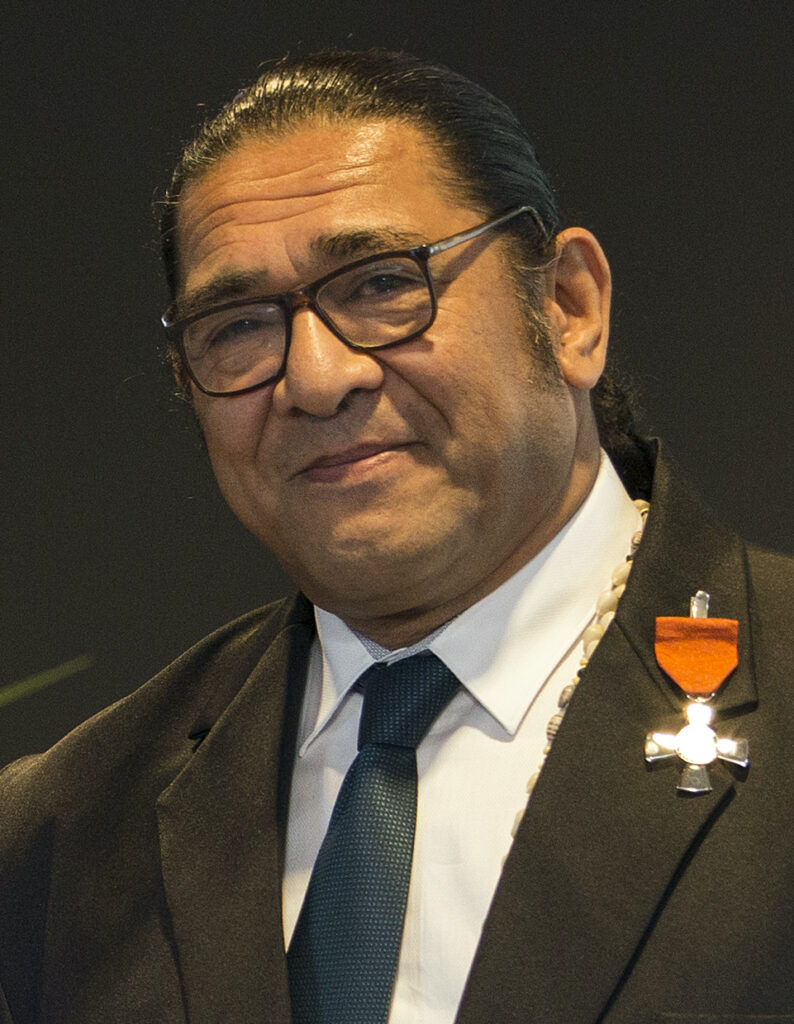
Posenai (‘Pos’) Mavaega is a well‑loved Samoan musician, writer, and producer, and has been the longtime Music Director for Pacific Underground – the trailblazing Pasifika arts collective he’s been part of since 1993. His work stretches across theatre, music, community arts, and major festivals, and he’s been honoured with some big recognitions along the way, including the Pacific Underground Lifetime Achievement Award and the Member of the New Zealand Order of Merit (MNZM). He’s toured as a musician with Che Fu and King Kapisi. And he’s done time as a stage technician with Fat Freddy’s Drop, Sol3 Mio, Shihad, Stan Walker and Bic Runga. Lately he’s been working on the music for PU’s latest production Music Portrait of a Humble Disabled Samoan (by Oscar Kightley), the story of musician, industry advocate and disability leader Fonoti Pati Umaga, which is featuring at the Aotearoa New Zealand Festival this March.
Pacific Underground (PU), founded in Christchurch in 1993, is Aotearoa’s longest‑running Pacific performing arts organisation. Created by Mishelle Muagututi’a, Oscar Kightley, Simon Small, Erolia Ifopo and Michael Hodgson – alongside support from key collaborators – the group set out to make contemporary Pasifika theatre that reflected the lives of the Pacific diaspora. Their breakthrough first play, Fresh Off the Boat, toured nationally and internationally, reframing Pasifika stories through humour and intergenerational tension, and helping cement PU’s cultural impact.
Music was integral from early on, especially after Pos Mavaega became involved as musical director in 1994, embedding live bands into productions and shaping iconic works such as Dawn Raids. Pacific Underground later expanded into Pacific Underground Music Productions (P.U.M.P.), releasing albums, running festivals and workshops, and helping develop artists like Ladi6, Scribe and Dallas Tamaira. Their base at the Cathedral City’s iconic Dux de Lux became a major South Island creative hub until the 2011 earthquakes prompted their move north.
Pos calls his three decades with Pacific Underground “a life journey.” That journey – part friendship circle, part cultural movement – has carried him from youth‑centre jams in Ōtautahi to crafting a new kind of biographical performance for stage productions like Music Portrait… “We were young creators back then… just doing a thing,” he says of the early days. “We didn’t break away from the church stories we all knew; we just extended our reach into music and stage.”
This new work distils everything Pos has learned about letting live music carry a story – and about building a theatre ecosystem where access is an artistic principle, not a compliance box. “The music sits behind the action… it’s very subtle,” he explains. “It supports what’s happening on stage.”
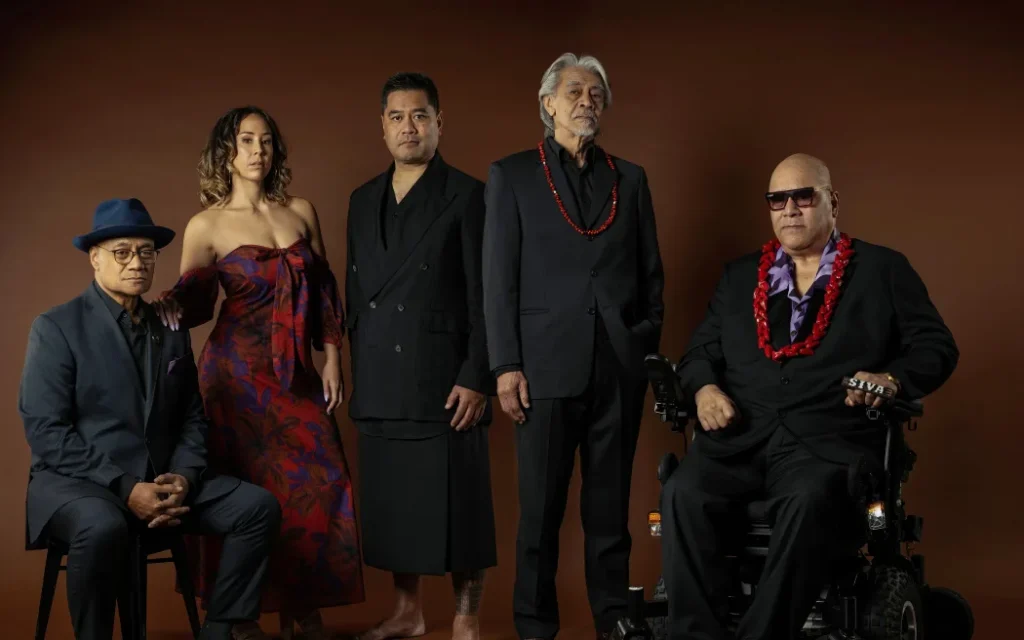
Speaking on Music Portrait… Pos tells me that this is more than a play. It’s best described as a biographical performance work, with a live band, movement, projected memories and scene work weave through chapters of Pati’s life – from his childhood in Wainuiomata, time in Samoa, a burgeoning industry career (including as an APRA rep (which is when Pos first knew him), and then a tragic accident that resulted in a spinal injury that redirected Pati toward advocacy and community leadership.
“It’s Pati’s life journey,” says Pos. “From growing up in New Zealand… to coming back from the islands with a trajectory he thought he was going on, and then things changed.” The accident in 2005 left Pati a tetraplegic. Despite that he’s never given up on music and returned to it, recording again by 2015 and composing new work that addressed stigma, identity, and resilience.
Pati grew up in a deeply musical household. His father insisted Pati and his brothers master instruments for church performances, and consequently, he developed into a skilled bass player. His talent eventually led him to join Wellington band Holidaymakers in the 80’s, and he featured on their chart‑topping 1988 single Sweet Lovers, a Bill Withers remake that became a standout track of its time in New Zealand music.
Across the decades, Umaga shaped a diverse and influential career: gigging extensively, running Pacific Nation Records, supporting the growth of contemporary Pacific music education (including playing a key role in launching the Whitireia music programme), and later composing pieces that delve into Samoan heritage and the lived experiences of disability.
Pati’s musical tastes and journey provided rich territory for Pos to mine when creating a soundtrack for this new play. It was a great challenge, Pos tells me, to create ‘suitable music’. Because unlike his previous collab with Oscar Kightley, on his play Dawn Raids, he needed to cast his creative net wider than just one decade. Further explaining, Pos says that Dawn Raids was rooted in the 80’s but this new show spans a greater time period. Pos’ score marks each era deftly and sonically. You’ll hear references to what he refers to as ‘White Sunday’ hymns and church harmonies from Pati’s upbringing. And there’s 70’s and 80’s reggae, funk and Pacific soul of Pati’s youth, even flashes of hard‑rock influences, he says. That last one was the most testing for Pos. He tells me that being required to create new music in the style of Deep Purple, Hendrix was a bit difficult. “I don’t know too much about how to play Deep Purple or Jimi Hendrix,” Pos laughs, “so it was cool to hear that side of Pati – and then put elements of that in without being too in your face.”
A poignant leitmotif comes from Umaga’s own whānau: an old family chant he recorded years ago. “We’ve reworked it, so it appears in different feels across the play,” Pos says. “The family will recognise it; the wider audience will just feel it.”
Pos tells me that when it comes to creating music for the stage, he composes guitar‑first, with chord structures, then melody – before shaping cues with the director’s story beats and Pati’s preferences. His brief here: write original music that feels period‑true without borrowing riffs. “Original is best,” he says, “and the challenge was writing like the 70’s/80’s rock without copying. First off, I don’t know too much about how to play Deep Purple or Jimi Hendrix.”
The on‑stage ensemble pushed him in new directions. The director’s starting point – violin and guitar – was novel for Pos, who’d “never worked with a violin before.” The lineup settled as guitar (Andy Mauafua), violin (Hayden Nickel), bass (Isitolo Alesana) and Pacific percussion (Meka Nehemia) – no rock kit, but traditional drums played with funk and reggae feel. And Pati himself will also feature on bass in one piece. “It’s a different looking drum kit,” he smiles. In rehearsals, one high‑energy dance needed propulsion; Pos grabbed a MIDI keyboard, built “random, crazy sounds,” and edited them into a kinetic bed – “the only technical piece,” but it fit the movement.
The band moves. Literally. “We’re not just a bunch of musicians sitting in the corner,” Pos says. “We’re active on the floor – moving with the actors.” The music follows and leads: performers respond to cues, and Pos shapes sound to what he sees. “You can’t really count off in time when you’ve got two wheels to push,” he says, describing the adaptive timing that emerges when choreography is built around wheelchairs, ramps and turning circles. “It’s a beautiful challenge.”
Pos wears a second hat as a producer with the Auckland Arts Festival, using this project to push for system‑level access – ticketing flows, car‑parking, backstage routes, bathrooms, seating plans. He’s done walk‑throughs with wheelchair‑using cast and access & inclusion advisors to identify barriers early. “We want to grow the audience space for disabled peoples to come into theatre at any time,” he says. The response from venues and council has been “respectful” and forward‑looking.
A small but telling scene in the show comes from Pos himself. After Pati’s accident, Pos visited him at the Christchurch spinal unit. “I didn’t realise that one visit changed a whole lot of things for him,” he says. “A little bit of care and support… really goes a long way.” That’s a message we can all take something from.
Music Portrait of a Humble Disabled Samoan
5-8 March, Rangatira, Q Theatre, Tamaki Makaurau
12-14 March, Tāwhiri Warehouse, Pōneke
Related Acts:
About the interviewer Tim Gruar

Tim Gruar – writer, music journalist and photographer Champion of music Aotearoa! New bands, great bands, everyone of them! I write, review and interview and love meeting new musicians and re-uniting with older friends. I’ve been at this for over 30 years. So, hopefully I’ve picked up a thing or two along the way. Worked with www.ambientlight.com, 13th Floor.co.nz, NZ Musician, Rip It Up, Groove Guide, Salient, Access Radio, Radio Active, groovefm.co.nz, groovebookreport.blogspot.com, audioculture.co.nz Website: www.freshthinking.net.nz / Insta @CoffeeBar_Kid / Email [email protected]
More by Tim Gruar
Gig Review: Mā @ Tāwhiri Warehouse, Wellington – 28/02/2026
Album Review: Did I Hurt Somebody?
MNZ Interview: Lou’ana

MNZ Interview: Julia Deans / Fur Patrol
EP Review: We Built This World With Aroha

MNZ Interview: Six60

MNZ Interview: Moss Te Ururangi Patterson
Album Review: 6IX
MNZ Interview: Rob Ruha