
MNZ Interview: Moss Te Ururangi Patterson
NZ Symphony Orchestra
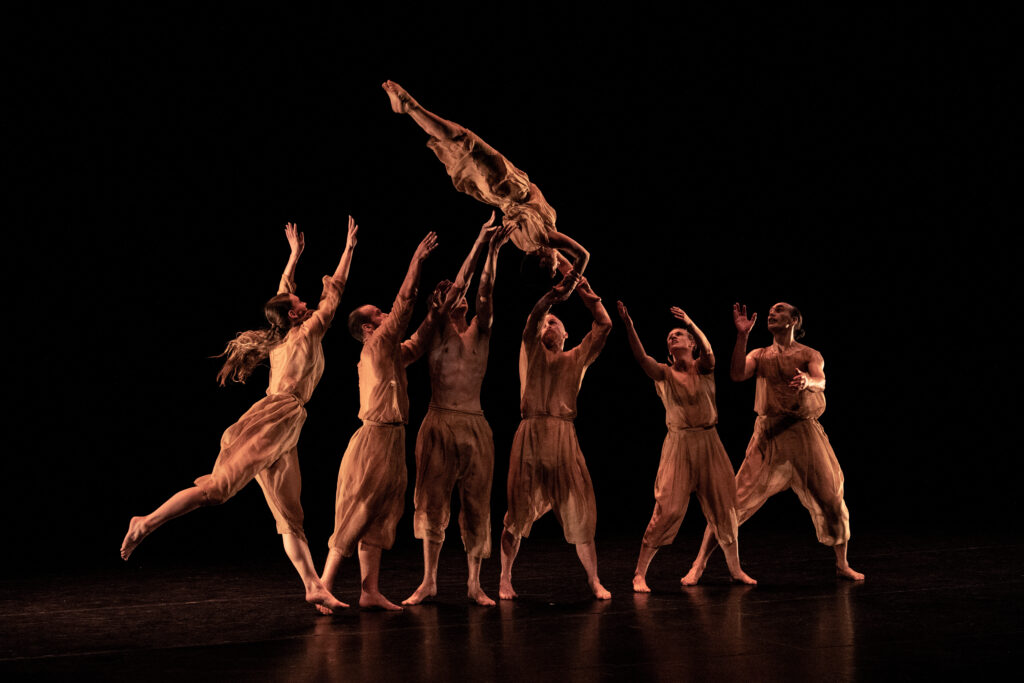
On three lively Wellington nights this March, dance, music, and voice come together at the St James Theatre for Gloria – A Triple Bill – a special trans‑Tasman event that celebrates legacy, personal stories, and the joy of performance. At its heart is the return of Douglas Wright’s iconic Gloria, set to Vivaldi’s soaring score (Gloria in D major RV589) and brought to life by the New Zealand Symphony Orchestra and Voices New Zealand, led by Dr Joseph Nolan. Joining it are two deeply personal new works: A Moving Portrait by Raewyn Hill of Co3 Contemporary Dance Australia, and Lament by Moss Te Ururangi Patterson, Artistic Director of The New Zealand Dance Company (NZDC). The programme promises an evening of emotional breadth and artistic brilliance, combining artistry and stamina, with Wright’s celebrated masterpiece of contemporary dance is made even more magical with a live musical accompaniment and choir.
Muzic.NZ’s Tim had a korero with Moss Te Ururangi Patterson about the production, Gloria – A Triple Bill, working with Shayne P. Carter on his work, Lament and the ongoing legacy of Douglas Wright.
Few choreographers have shaped Aotearoa’s contemporary dance landscape as profoundly as Douglas Wright (1956–2018). His work is known for its fierce humanity, muscular precision, and spiritual luminosity. After a career abroad with major international companies, Wright returned home to create groundbreaking works that reimagined local dance vocabulary. Gloria premiered in 1992 and has appeared in five previous Aotearoa Festivals; in 2026, it returns again. Its revival is guided by Wright’s trusted collaborators Megan Adams and Anne Dewey – artists named in his will as the custodians of his work.
Moss Te Ururangi Patterson, who is executive producer for the project, is unequivocal about the approach: “We have to honour the legacy of that work by being as close to the original as possible.” He describes the choreography’s precision: “There’ll be a lot of specificity around how dancers go from one place on the stage to another… they’ll need to really exact everything.” Only after this meticulous reconstruction is achieved will room open for the current dancers’ interpretive nuances: “…then there’ll be some movement in terms of the current dancers’ interpretation.”
Costuming traditionally draws from Wright’s signature yellow and yellow‑ochre palette, glowing against Vivaldi’s choral architecture, according to Patterson. Scour the web and you’ll find comments praising Gloria “an exhilarating” or “graceful airborne celebration” of life – a reference to the physicality of the piece as dancers twist and fly about the stage. And Patterson agrees: “Douglas’s (work Gloria) is glorious, so joyous … then you get the full orchestra…and the choir coming in – it just keeps on going (and uplifting).”
The second major voice in the programme is Raewyn Hill, Christchurch‑born Founding Artistic Director of Co3 Contemporary Dance Australia. Her choreography is known for emotional clarity, sculptural lyricism, and explorations of body memory, time, and lineage. In A Moving Portrait, Hill creates what festival sources describe as “an intimate meditation on ageing, fragility and grace,” set to Arvo Pärt’s Tabula Rasa. The programme promises a “lyrical, reflective meditation on time, ageing, body memory, and family lineage”.
Elaborating, Patterson frames the work with admiration: “My understanding is that the work is around ageing… around body memory… maybe she’s talking about honouring the past and being strong in the present.” He calls it “a very lyrical, beautiful work… a moving portrait.” Positioned between Lament and Gloria, it becomes an elegant bridge from earth to light, providing a contemplative pause before the evening ascends toward jubilation.
Hill’s presence in the programme also reflects a landmark trans‑Tasman collaboration. Co3 Contemporary Dance Australia partners with NZDC not only to present Hill’s new piece but to join forces in the restaging of Wright’s Gloria, merging company cultures and artistic legacies in a rare collaborative event.
Opening the evening is Lament, a new work by Moss Te Ururangi Patterson. For Patterson, the work is both remembrance and navigation. It is shaped by questions of intergenerational trauma, memory, and resilience. Patterson tells me that Lament draws deeply from the 1860’s New Zealand Land Wars – specifically the survivors’ escape from the Battle of Ōrākau (1864) and their subsequent journey toward Tokaanu, where Patterson grew up. Along that passage, a dirge emerged: E Pā Tō Hau, a song he has known since childhood.
E Pā Tō Hau is a mōteatea composed by Rangiamoa of Ngāti Apakura following the 1864 British attack on the peaceful settlement of Rangiaowhia. The chant laments the trauma, displacement, and land loss suffered by her people, as well as the death of her cousin Te Wano. Its imagery expresses deep sorrow, describing tears like ‘rain’ and the pain of being severed from their whenua and authority over it.
“It must have taken a long time, but over that journey they composed this dirge …And they arrived in Tokaanu, specifically, which is where I was born and grew up…And, so we’ve been singing that song ever since I can remember. That is the inspiration for this work (Lament). That’s the inspiration for the sounds, the sound score.”
For Lament, Patterson reunites with longtime collaborator and friend Shayne P. Carter, whose music he describes as providing “complex emotional layers… that give me many challenges in the studio.” Their score for Lament expands ideas from their earlier collaboration for Home, Land and Sea, particularly material from its final act, Sea. “We’ve taken the idea of Sea and transformed it into a new piece… using this dirge (E Pā Tō Hau) as the central part of the composition.”
“And Shane’s been writing it since last year,” he continues, “We’ve got a draft and it’s really cool. It will include sort of moments and some of those words from E Pā Tō Hau. It’s sort of a sort of an ‘apprehensive’ kind of beautiful piece (of music). I’m choreographing to at the moment, and I’ll finish that next week, on Waitangi Day. We will complete the work, and that will be the opening for the program – that’s New Zealand Dance Company’s contribution to the programme.”
I ask Patterson about working with Carter and he fills in some history for me: “We started back in 2015-16 developing a work called Pango Black (performed by Atamira Dance Company), which was amazing.”
This was a collaboration between Patterson, master musicians James Webster and Shayne P. Carter, six male dancers, and award‑winning spatial and projection designers create a mesmeric fusion of movement, imagery, light, and sound as the dancers work around a black rope wharenui exploring their individual experiences of Te Kore. The premise of the work: “Enter into the nothing, the blackness. From this formless state of consciousness come potential, movement, energy and life.” – Atamira Dance Company
“And they played sort of on the opposite side of the stage to each other. We had such a great time that we were like: “What’s next?” You know? So, that followed into a whole bunch of other live dance explorations, including going overseas to Asia and different things with Korean culture (where he presented work in Korea and Taiwan around 2020). And that was amazing too.
More recently this year, we collaborated on work that I made called Home, Land and Sea with the Royal New Zealand Ballet, and we’ve just put out the album of the music and Shayne’s collaboration with the New Zealand Symphony Orchestra.
Home, Land and Sea premiered in 2025, a collab between Royal New Zealand Ballet and the New Zealand Dance Company explores Aotearoa’s cultural heritage through a contemporary choreographic lens. It featured an original score composed and performed by Shayne P. Carter, whose music blended ancient soundscapes with modern expression to reflect themes of place, identity, and connection. Later in the year Carter released the accompanying digital album.
“Shayne’s unrelenting. He creates complex emotional layers that give me many challenges in the studio to work with musically, and so that’s fantastic. And he worked intensely on it, and obviously, I did too on the dance part. It was a really transformative process. Everything that I make is always see it as a follow on from the next thing. It’s never really trying to make everything up from scratch. It’s always a follow on. And so, this score (for Lament) is a follow on from that (Home, Land and Sea). We’ve taken one of those pieces, which is the last act of the piece, and sort of rearranged it. Now we’re kind of expanding it to talk about that part of the collaboration, to make a new work called Lament, which talks about where we are navigating to, where have we come from, and using this dirge as the central part of that composition. It’s sort of trying to grapple with our past and trying to get a sense of where we’re going. But, also, very specifically trying to pinpoint that battle in the 1860’s and trying to say: “What does that mean now? You know?”
I ask if he thinks it’s healthy when reviewing our colonial past to think wider than just blame and retribution. “Yeah, for sure. It’s got to have a sense. We’re going to have hope… I’m searching for that.”
As a choreographer, Patterson openly acknowledges the influence of mentors such as Wright. But he also recognises the need for artistic independence: “You’ve learned from your mentor… then you’ve morphed it into your own aesthetic.” Seeking guidance, he asked Megan Adams what Wright would want him to make. Her answer was simple: “Be yourself.” Patterson describes his process as intuitive: “Via this weird osmosis, it will come about.”
I want to delve deeper on this. Re-staging is more than just channelling Wright or thinking if this is what Douglas would have done in a particular situation. “There’s always a constant fear of not honouring your mentors and you know, and how do they sit within your system to enable you to make something else which is not them. I basically specifically asked Megan, I said, what do you think Douglas would like me to make? She said: “He would probably just say ‘be yourself’ and make something that you want. So, yes honour his legacy with the work that I’m making, but at the same time have to have a degree of separation, because making something that’s aesthetically similar to him. It’s probably just more remembering that he’s part of my legacy, too, and that influences the decisions that I’m making in the studio now with the dancers, you know?”
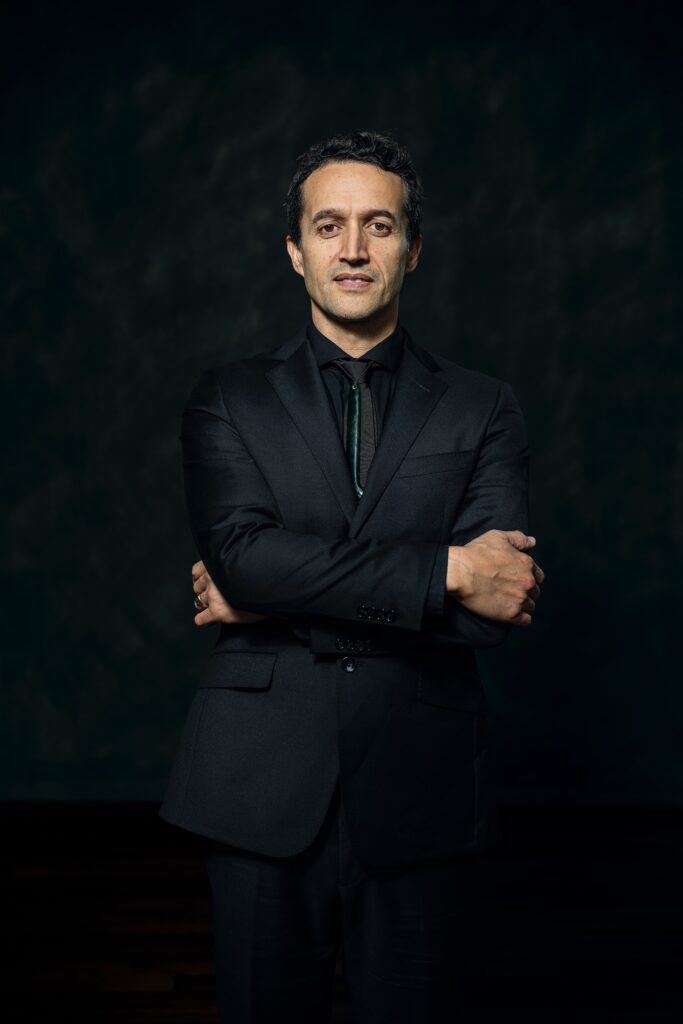
“To go in and choreograph in about 45 minutes and there are particular movements that sometimes I’ll go: “Oh, that kind of looks like something Douglas might do.” But I have to really be careful to say: “Is that really helping me to tell the story, because obviously I want to maintain the artistic trajectory that I’m on, personally. That’s really important and what people would like to see, I think.”
So, given the number of times Gloria has already been performed, how do you continuously refresh a work like Gloria? “You know, it’s been done since 1990 and keep moving it on, and so forth without moving it away from what it is. We’ve handpicked the dancers. We are going to follow the guidance of Megan and Anne. We are going to come together with a sense of camaraderie right from the very start, which will begin with a welcome to studio and training together. And then we’re essentially following where Megan and Anne are going to take us. The dancers’ interpretation of Douglas’s iconic work will be where the magic will happen.”
Patterson envisages that the programme will unfold according to a clear structure, a “trajectory toward jubilation”, from the earthbound solemnity of Lament, giving way to the lyrical meditation of Hill’s work, before the evening culminates in the radiant exultation of Wright’s Gloria, with full orchestra and choir. “I’ve been thinking about how we can start things quite low and grounded. My work’s very sort of earthy tones. Then Raewyn’s, from what I know about what she’s making, it will be, you know, there’ll be a sense of hope and elevation. And then that takes us into half-time and then it just keeps on going with Gloria with the yellow costumes, the full orchestra, the choir, …the full sort of sound and then at that point it sort of leads you to …”. Full jubilation? I ask. “Yes. It’s sort of just heads in that direction.”
As contemporary audiences shift with digital‑age attention spans, Patterson reflects on enduring artistic values. “If it’s got integrity and originality… it rings true, no matter what decade we’re in.” He explains that the best way to reach different audiences is simply to focus on making great, authentic art. He says people connect with work that’s original and well‑crafted, no matter their age. He gives the example of his own daughters watching old movies or looking at paintings with the same critical eye and appreciation that he does – because it’s still good! He values keeping dance history alive, from New Zealand icons like Douglas Wright to major international influences – because it helps both artists and audiences understand where the work comes from. We both agree, there’s nothing like the buzz of live performance: when a show really lands, the energy between the dancers and the audience is electric, and first‑timers often walk out wondering why they hadn’t been going all along.
Patterson invokes the Māori concepts of ihi, wehi, and wana – the energetic exchange between performer and audience. “They get a feeling that they’re connected. And then we’re in the middle is this sense called wana (the Māori term of being connected). And then once you’re in ‘the pocket’ or you’ve experienced wana, that’s when you know. You can begin to manipulate time and energy depending on where the audience is at. It’s kind of like a great band playing and you know you’ve got the crowd when they’re singing with you or I know when they’re with you… that’s what carries them into the foyer and cafés afterwards.”
Gloria – A Triple Bill
Aotearoa NZ Festival of the Arts St. James Theatre, Pōneke 12–14 March 2026
Main Image Photo Credit: Chris Symes
About the interviewer Tim Gruar

Tim Gruar – writer, music journalist and photographer Champion of music Aotearoa! New bands, great bands, everyone of them! I write, review and interview and love meeting new musicians and re-uniting with older friends. I’ve been at this for over 30 years. So, hopefully I’ve picked up a thing or two along the way. Worked with www.ambientlight.com, 13th Floor.co.nz, NZ Musician, Rip It Up, Groove Guide, Salient, Access Radio, Radio Active, groovefm.co.nz, groovebookreport.blogspot.com, audioculture.co.nz Website: www.freshthinking.net.nz / Insta @CoffeeBar_Kid / Email [email protected]
More by Tim Gruar
Gig Review: Mā @ Tāwhiri Warehouse, Wellington – 28/02/2026
MNZ Interview: Pos Mavaega
Album Review: Did I Hurt Somebody?
MNZ Interview: Lou’ana
MNZ Interview: Julia Deans / Fur Patrol
EP Review: We Built This World With Aroha

MNZ Interview: Six60
Album Review: 6IX
MNZ Interview: Rob Ruha