
MNZ Interview: Cross Section S03 / E10 – Stephanie Brown / Play It Strange


Aiming to dissect the cross section between the creative process and the industry side, Cross Section is an exciting interview series hosted by Shannon Coulomb.
Founded in 2003, Play It Strange is a charitable trust dedicated to supporting young songwriters across Aotearoa through national songwriting competitions, professional recording opportunities, mentorship, and live performance experiences. In 2025, the organisation reached a major milestone with a record 879 original song and waiata entries, the recording of over 200 student works, the launch of its podcast On The Record, and a year-long slate of album releases featuring alumni from its programmes. With a strong focus on nurturing confidence, creativity, and industry understanding, Play It Strange continues to play a central role in shaping the next generation of Aotearoa’s music community.
Shannon recently caught up with Play It Strange’s CEO, Stephanie Brown.
2025 has been a record-breaking year for Play It Strange. What stands out to you most about this year compared with previous ones?
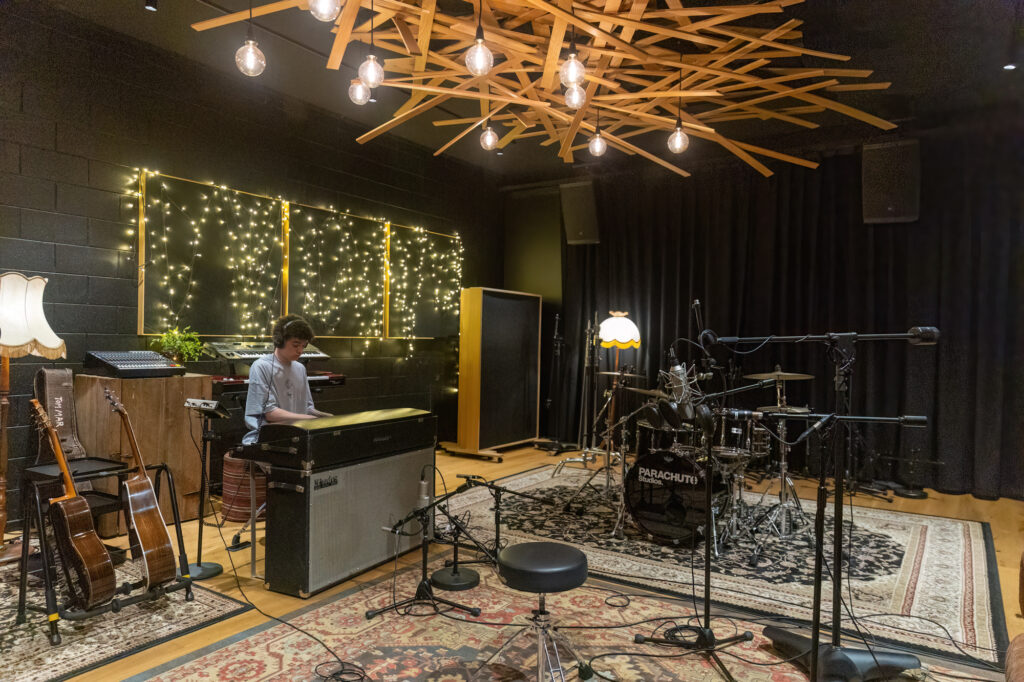
The absolutely incredible talent across such a wide range of genres. We’ve noticed a far wider range of genres entering this year than in previous years too. We have awarded over 200 finalists a day in a studio to professionally record their track, and are releasing these on digital albums on streaming platforms over the coming months. Alongside this, the sheer scale of participation this year, 879 original songs from across the motu, speaks to how valuable songwriting is as a creative outlet for young people.
The annual showcase brings together competition winners, past participants, judges, and mentors on the same stage. What do you think that mix shows about the growth of young songwriting in Aotearoa?
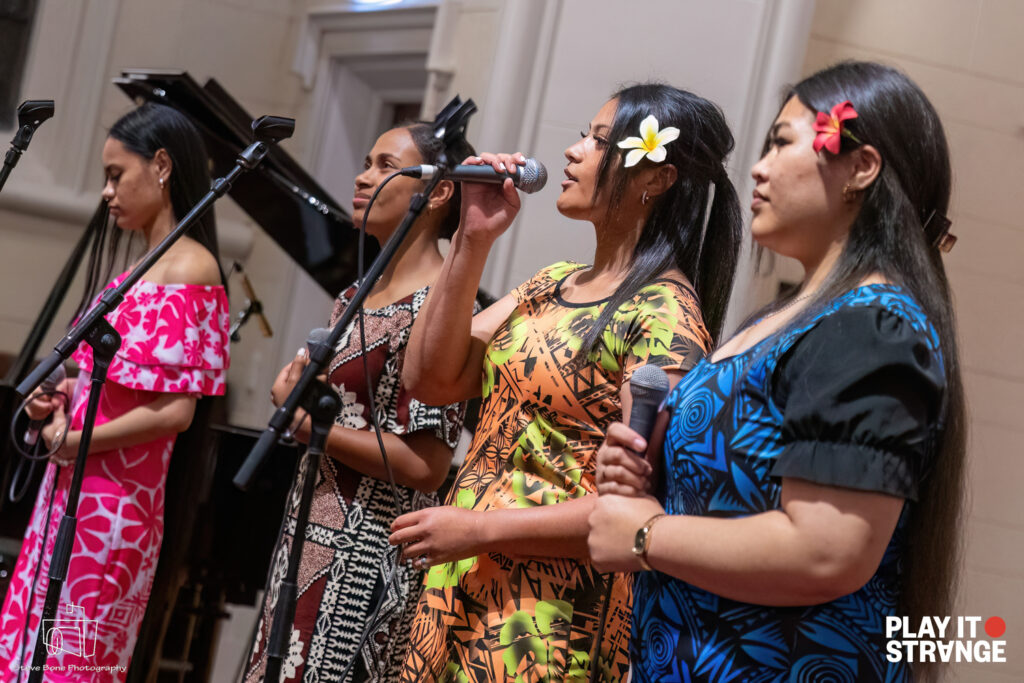
That the music industry in Aotearoa is a village. It is inspiring to see established musicians giving their time, wisdom and advice to the younger generation. Not only that, but getting to witness such incredible young talent is inspiring for those who are established in the music industry too. The future of music in Aotearoa is in very safe, very talented hands.
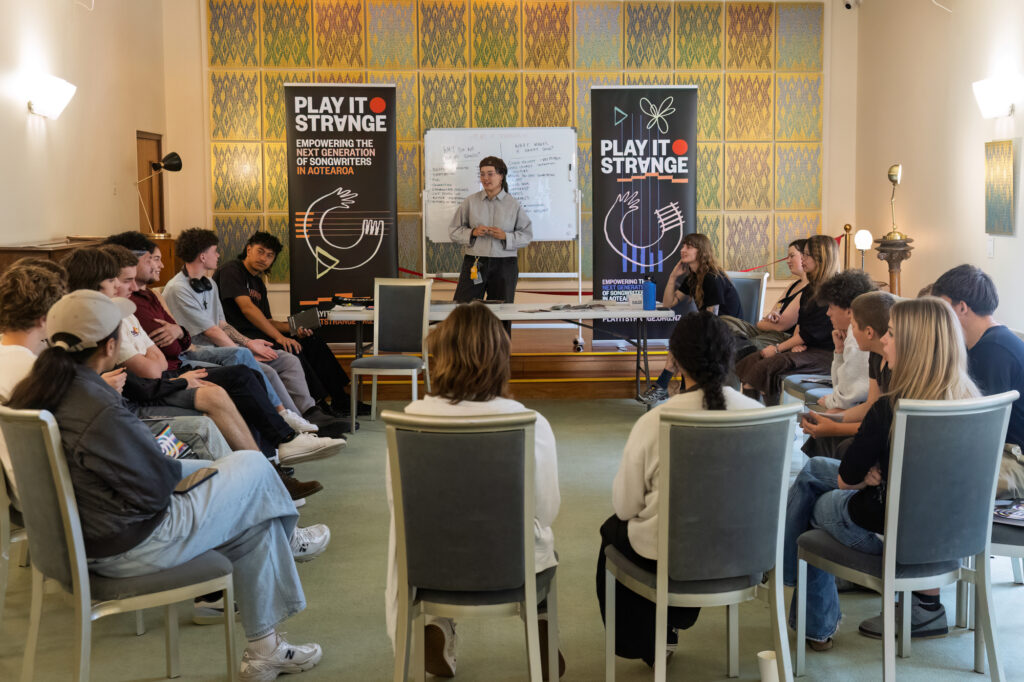
This year the showcase day included radio sessions, songwriting discussions, recording workshops, and performance mentoring. Why was it important to build a full day of learning alongside the evening performance?
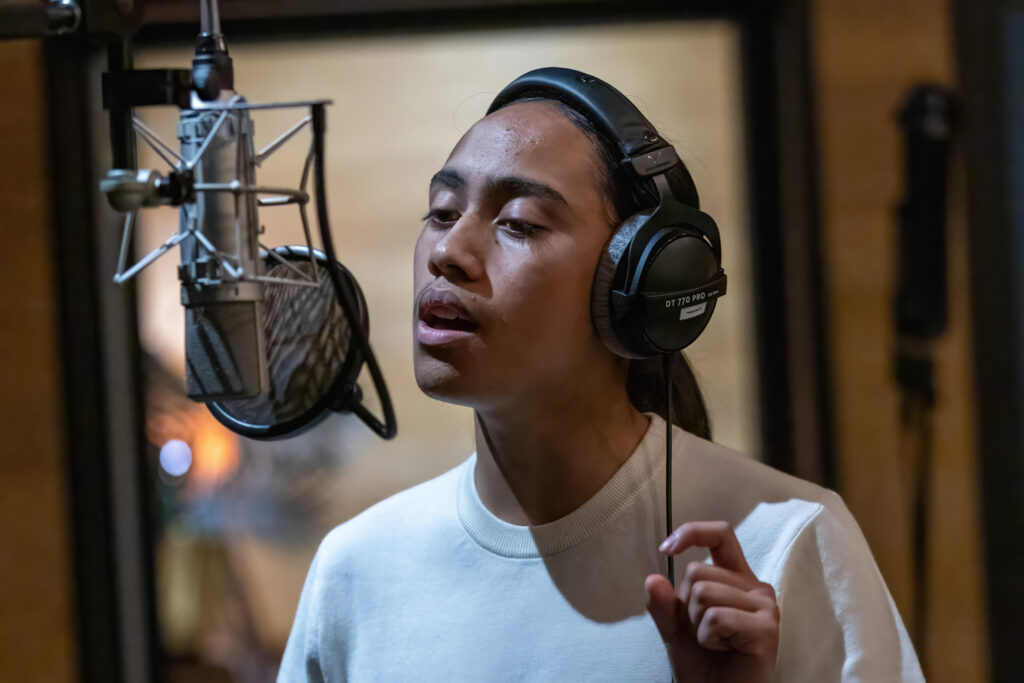
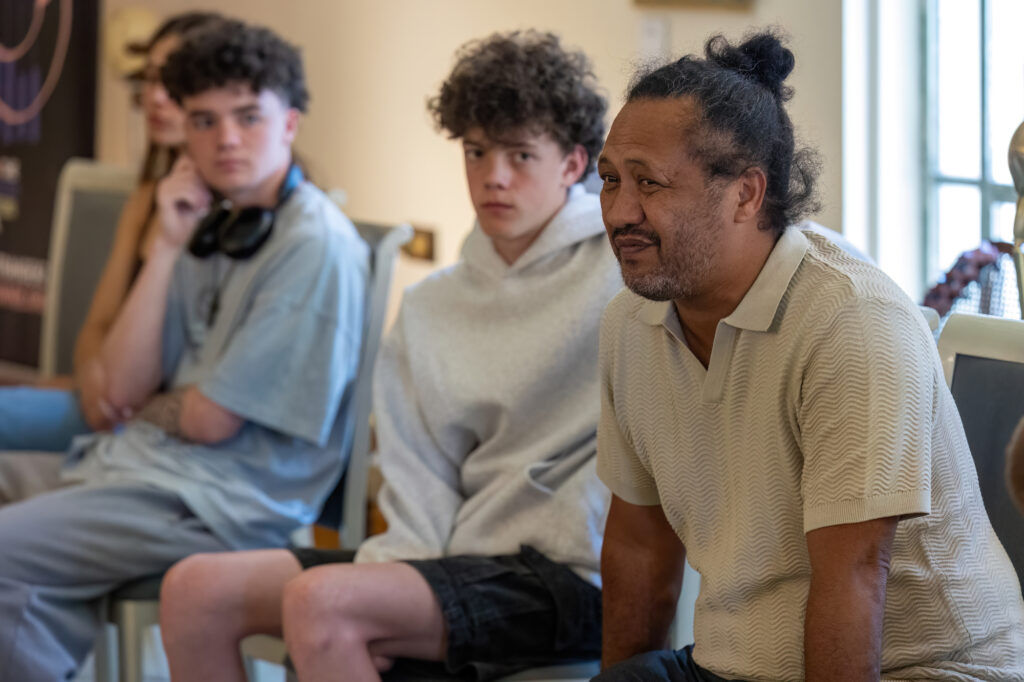
Outside of Tāmaki, some of our performers joined us from Gisborne, Whanganui and Te Whanganui-a-Tara Wellington. Firstly, we wanted to maximise the trip to Tāmaki Makaurau for them. Secondly, the performers were able to spend a day with other emerging musicians who they will travel through this industry alongside for the next 50 years. That’s why we invited more Play It Strange alumni to attend the day of workshops in addition to the performers, with 24 attending in total. Alongside creating a sense of community, the workshops provided an exciting opportunity for them to learn from industry leaders about areas essential to their growth and development as early-career artists. Something that’s really important to us at Play It Strange is breaking down barriers and making parts of the industry more accessible for young people to understand, so getting to meet in a room with radio programmers, established songwriters, professional producers, and touring artists provides access to a wealth of knowledge they might not know where to look for otherwise. Our Play It Strange team members Paige and Evie Bamford led songwriting workshops on the day too, and Evie said watching these rangatahi artists engage with the information was so inspiring, adding that it says a lot about the motivation and dedication of the future generation of creatives in Aotearoa.
With 879 original songs submitted in 2025, are you noticing any common themes or shifts in how young people are writing music right now?
Common themes that came through this year include how young people are understanding and making sense of incredibly complex themes, issues and feelings despite their age. They show how they see and process the world around them in a way that’s both unique and relatable. There have also been no boundaries when it comes to genre or experimenting with different instruments. To better understand shifts compared to previous years, I turned to our founder Mike Chunn, who has listened to every single Play It Strange entry since 2003. Mike says there is a noticeable increase in sophistication year on year in both music and lyrics, as well as arrangements. He notes that while past years had an adventurous sense of creativity, the wheels of artistic excellence are turning stronger and stronger each year.
Past Play It Strange artists are playing a bigger role than ever in 2025. Why is it important for young musicians to see people a few steps ahead of them still involved?
“You can’t be what you can’t see.” It’s cheesy but it’s true. Nothing we could ever say would be more motivating for our entrants than hearing from successful artists who have been through Play It Strange themselves. Showcasing alumni who are now established musicians doesn’t just inspire, it normalises the pathway and makes the journey feel achievable and human.
Judges and mentors such as Bic Runga, Dame Hinewehi Mohi, Rebel Reid, and CHAII continue to return year after year. What do you think keeps experienced artists wanting to give their time to this programme?
Play It Strange has been platforming emerging songwriters for 23 years, and knowing the good work we do, we are fortunate that experienced artists continue to support both us and the next generation of artists. As a charity, we are fully reliant on funders, supporters, and those who believe in our kaupapa getting behind our mahi. Experienced artists and industry legends keep coming back because Play It Strange is genuinely youth-centred and kaupapa-driven, existing to platform emerging talent, and artists can see that and want to help the next generation of musical talent in Aotearoa.
The Play It Strange podcast has become a new way to support emerging artists. What conversations did you feel were missing before it existed?
The music industry is tricky to navigate and many emerging artists don’t know where to start. We began with the questions we are asked most often, such as those around rights and royalties, and topics we wanted to share in an accessible way, including how to prepare for a first day in a recording studio. We feel a strong duty of care to provide pastoral support to emerging musicians, but as a team of three we cannot reach everyone in person. The podcast allows us to support far more rangatahi and emerging artists across the country than just our finalists.
Performing can be just as challenging as songwriting for young artists. How do workshops like Laughton Kora’s help students approach the stage with more confidence?
Laughton has such a way with words, and as Evie said during the workshop, watching him teach is like watching Picasso paint. He spoke about how people make impressions about who you are and what music you make the moment you step on stage, before you’ve even made a sound. He had students get up and physically act like different genres, while also covering artist branding, marketing, and practical performance basics such as what to ask for at soundcheck, what to listen for in on-stage sound, tuning, guitar tone and levels. The goal was for students to leave feeling empowered and in control of the stage rather than intimidated by it, and it was perfectly timed just before the concert.
With ten albums being released in 2025, how do you keep the recordings sounding professional while still letting each artist sound like themselves?
Each finalist receives a full day in a professional studio with a producer, with sessions taking place all over the motu at studios such as Roundhead, Parachute, Big Fan, The Armoury, Sublime, Orange, The Porch, The Lab and Broome Studios. Students have worked with award-winning producers including Noema Te Hau III, Mazbou-Q and Emily Wheatcroft-Snape, and all tracks are mastered by Chris Chetland at Kog Studios. Our producers encourage rangatahi artists to stay true to their own sound and creative vision while also trying new ideas in the studio, ensuring each finalist feels empowered throughout the process.
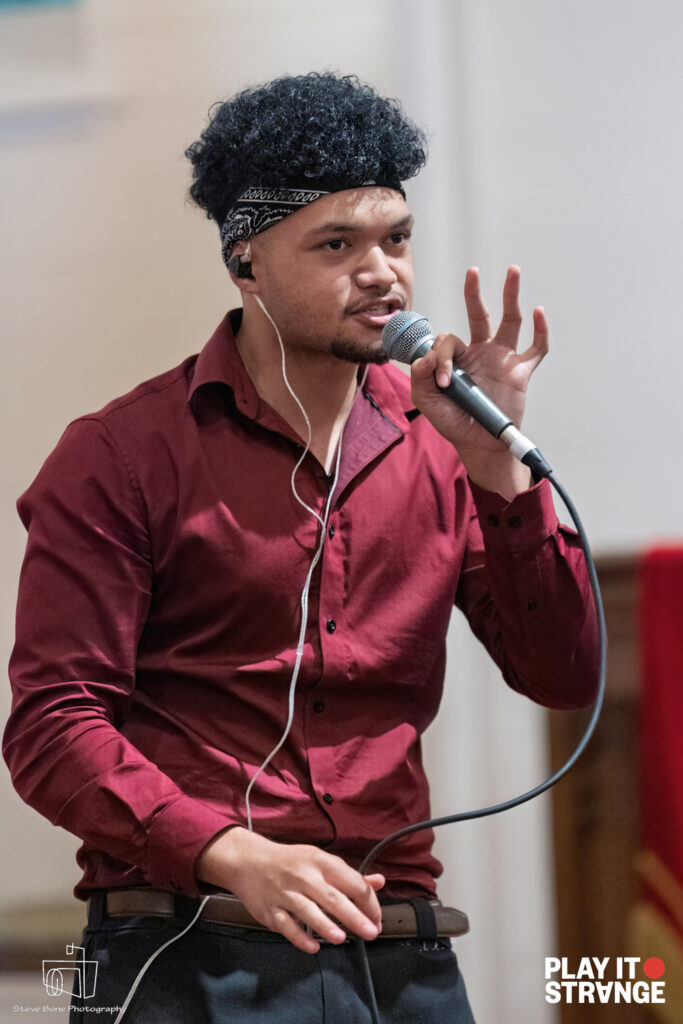
Now that the December 4 showcase has taken place, what do you hope audiences and participants took away from the night about Play It Strange and its role in supporting young songwriters in Aotearoa?
Play It Strange is more than our songwriting competitions. We are part of the wider musical ecosystem in Aotearoa, championing rangatahi songwriters. While competitions remain at our core, we also offer mentoring, performance opportunities, songwriting workshops, and guidance to help emerging musicians navigate the industry. We are not just helping songwriters record their songs professionally, we are helping artists enter the music industry and giving them the tools to stay.
*****
Shannon Coulomb is the Head of Music at Birkenhead College and Curriculum Specialist for music education at AUT University. He is also a member of Auckland based recording project Impostor Syndrome.
Related Acts:
About the interviewer Shannon Coulomb
Shannon Coulomb is a Head of Music and curriculum specialist working at a national level in music education. He is also a member of Auckland-based recording project Impostor Syndrome, exploring analogue-driven sound and psychologically charged songwriting.
More by Shannon Coulomb
MNZ Interview: Bottom Bunk Club

MNZ Interview: Cross Section S03 / E09 – High Dependency Unit

MNZ Interview: Cross Section S03 / E08 – Cry Wolf

MNZ Interview: Cross Section S03 / E07 – Static
MNZ Interview: Cross Section S03 / E06 – Jazmine Mary
MNZ Interview: Cross Section S03 / E05 – Elleana Dumper
MNZ Interview: Cross Section S03 / E04 – Lisa Crawley

MNZ Interview: Cross Section S03 / E03 – Matthew Mottram
MNZ Interview: Cross Section S03 / E02 – Ripship