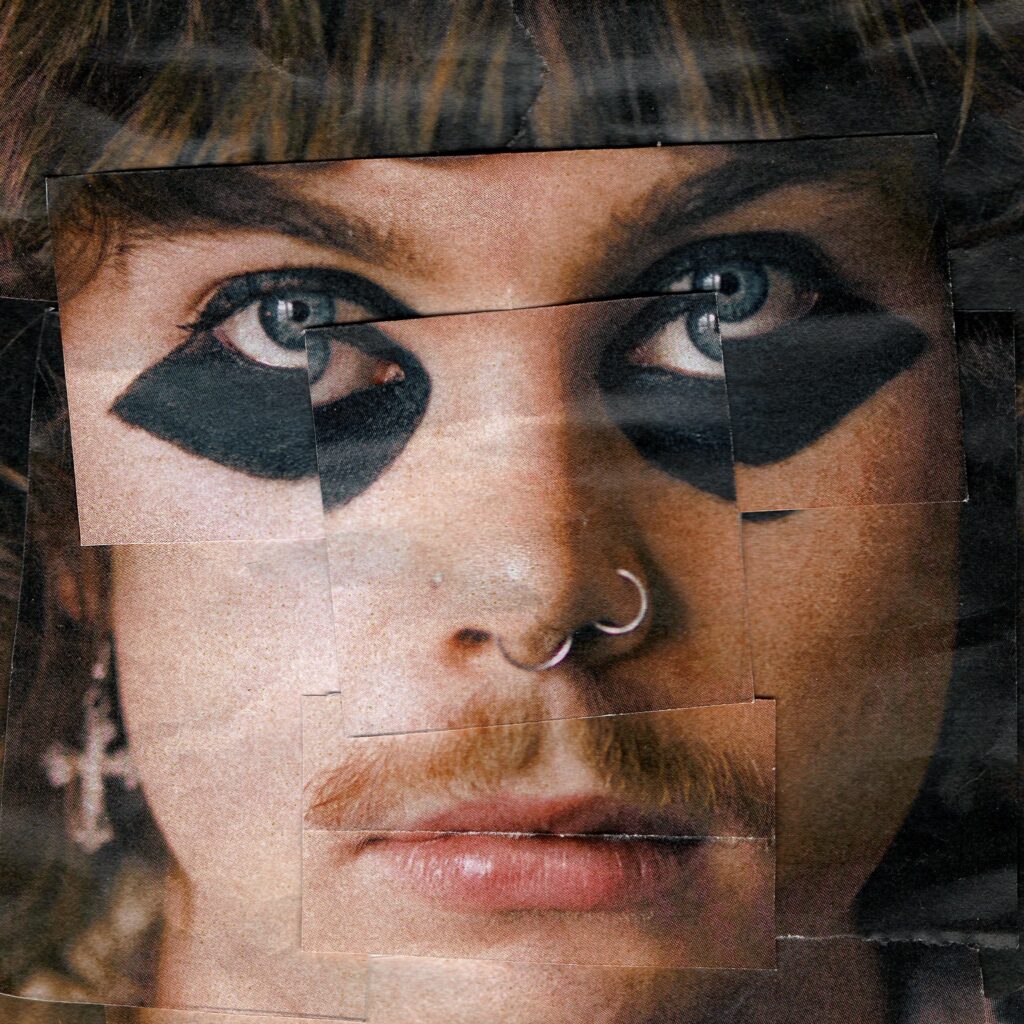
Sometimes short EPs can have the same emotional weight as full albums due to the variety of sounds to be enjoyed and the range of lyrical themes. One such EP that takes the listener on a journey is First Reserve’s There’s A God, not only over the six songs that create a kind of story arc but also within the convoluted songs themselves.
There’s ample complexity to be enjoyed here as Ryan Connaghan, the brainchild behind the moniker, displays both their musical ability as a multi-instrumentalist and as a clever plot-twisting storyteller and songwriter. There’s massive changes in dynamics that arrive both unexpectedly, while other times the song is nearly pleading to shift into a higher gear and the transformation is a cathartic moment for performer and listener alike.
The lyrics are similarly juxtaposed – they oscillate between extremely personal (especially when the microphone is held close, creating a type of claustrophobic confessional) to the universally felt. Occasionally, when these lyrics sway back into the generality of the human condition away from the private, there are clichés used – but these are worn with irony, or so it seems, as if Connaghan is fully aware of the connotations such a phrase brings to mind and is either celebrating, or challenging, the ghosts of these terms. Certainly, I prefer the odder lyrics that seem peculiarly personal to the writer that evoke memories of tertiary-education life, flatting in a city, late nights, unsure relationships, but also fear of affection not being reciprocated and, (there’s quite a lot of this) being an introvert. The performances carry the clearly pronounced lyrics and melodic voice to the fore, but there are plenty of moments for the instruments to shine, particularly flashes of acoustic guitar wizardry and some funky bass fills.
Is it rock? Well, yes, but perhaps both more and less than what you might expect with just that genre definition to prepare you. There are no sizzling guitar solos and few bombastic drum parts. When the band really does emote they find a fuzzed out phrase or note to accent that works as a counterpart to the emotional lyrics that preceded it, so the band operates like how I imagine dramatic strumming parts may have sounded like in the original songs that Connaghan wrote. The songs sound very fresh in this way, as if they have run to a competent band to perform their demos and conducts them through, but the effect is heartfelt and genuine.
Connaghan is joined here with long-time collaborator Tarn PK who both helped in arrangements and produced the EP with them. Comparisons to 2000’s indie bands can’t be helped, such as Grizzly Bear, The Kooks and the less hectic moments from Arctic Monkeys, but influences such as The Smiths, The National and Death Cab for Cutie are floating around too. Acts that First Reserve have played with such as On a Tuesday and Park Flyers also seem similarly a blend of balladry with the musculature of rock instruments ready to punch out rhythms and concoct the dynamic range the emotion hints at. Post-emo-alt-folk-rock, maybe?
The EP begins with Your Door Is Always Open which hints at a complex relationship that could be described by a bio student as symbiotic. The opening line is utterly, quirkily personal: “You stole me dinner, when we couldn’t afford it, I said I’d go myself but the lights in the store make me nauseous,’. Synths warble beneath jangly acoustic guitars as a beautiful tension is constructed between awkward lyricism and a calm presenting voice like Connaghan is staging an intervention. The words are vulnerable but the syllables keep landing perfectly, even when they deliver such gems such as “and i still don’t know how I got here, when I’m still afraid of talking”. There’s some truly amazing guitar runs before the band enters in all their fuzzed out glory. As the song comes to a close, demonstrating an unusual song structure, any closure the listener sought out for the characters is ruined with the inevitable truth about the relationship: “your smile is see-thru, your eyes look tired, you say you love me but we both know that’s a lie”.
Last One has a little more bite and opens with a steady and faster beat. Connaghan sings a fast passage to open the song up with what is becoming an emerging pattern of complicated, confessional lyrics: “you’re so good at letting your feelings show, I know it’s not the welcome home that you’d hoped for, but you don’t have to be so cold when I know you know that I was counting the days till you got home”. There’s some accusational energy here and considerable anger burbling beneath. But, by the songs end this has transformed into self-doubt as if the writer themselves is to blame instead, perhaps to save face with the object of their attention: “did I do something that I shouldn’t have?, I never felt like I was good enough”.
Me & My Friends is a song I’ve heard this band perform before and it’s an easy stand out pop song that has single release appeal all over it. While it’s a slower paced pop ballad that sounds quite upbeat, the lyrics are (as anticipated) rather sombre: “getting tired of waking up and feeling less alive” hits quite hard. The song seems to be about friends that are unaware or unable to ask about mental health. The chorus of “whenever they ask me what’s on my mind, I say I’m doing fine” hints at this, laying fault at both their friends and themselves, but also society. By the songs end the effects have been built into exploding fireworks but it all sounds so damn joyous despite the lyrics: “me and my friends, don’t care about it”. But what is IT? Mortality? The song doesn’t tell, like the protagonist.
Time Song is another stand out track that reminds me of 90’s French pop band Air. The production is smooth and bouncy. Connaghan is once more waxing poetic, keeping lyrical themes personal and unique. “I missed your graduation I should have gone out instead I stayed in once again”. Later, they seem to be talking about a different person in other verses, but a similar inability to fully connect with them or to say goodbye properly is explored, the most extreme example of which is “couldn’t make the funeral they only let in 20 people and rules are rules”. The song, like the last one, is easily accessible and catchy, and were it not for the lyrics, the song would be consummate pop.
I Couldn’t See Me is an odd, acoustically led ballad with a hypnotic beat about the uncertainty of the future. Here the lyrics are concerned with maybe not being part of people’s lives later: “and we were lying on the lawn talking about what we would see in fifteen years when we’re all gone and see each other on the street, I saw you looking all grown up exactly where you ought to be, I saw all three of us together, but I couldn’t see me”. While the words might seem peculiar the rhythm works to deliver the imagery perfectly, but unlike the other songs that might have been joined by the band or an unusual element like a new instrument, the song suddenly ends in a conversation in the studio about how this is the way to end an album, only it hasn’t ended at all…
There’s A God (somehow the diametric opposite of the similarly titled Smashing Pumpkins B-side If There Is A God) is a piano based song that features some great singing over some antiquated, quirky chord patterns that bring to mind vaudeville shows from the 1920’s. Connaghan sings tenderly on this, their anger dissipated during the course of the EP, leaving only a wistful and sentimental manner to deliver a strangely unexpected line: “if there’s a god I hope she blesses you,” but before the listener has time to react to such syrupy lines, they disrupt this imagery with an abrasive “even if you don’t deserve it” somehow ruining it deliberately and changing the whole meaning.
At the end of the song (like the EP in general), Connaghan is becoming more confessional and readily blaming themselves rather than others, like a counselling session wrapping up: “I’m losing sight of how to see myself, I can’t talk to my friends because I’m so scared about the stories to tell”. Whatever demons they have been fighting, by the end of the EP they seem to have been identified a little better but they stem from the self rather than others. In a reverb drenched voice they holler “you say it’s not my fault”, then the voice lowers, becoming closer, more personal, to deliver the repeated words: “if there’s a god I hope she’s just like you” all the while an appropriately slightly-out-of-tune piano quavers unsurely beneath. Powerful stuff.
What to make of it all? It is entertaining, albeit the sombre lyrical themes that might trigger some not in the mood for deep psychological analysis. However, the emotions seem to come from a genuine place and the performance is equally sincere. The songs are certainly interesting and while there is no discernible genre that truly connects all the tunes, there is an undeniable style of the artist that does join them while the track listing order appears to tell a story. There’s a God is bittersweet, vulnerable and unique, but what’s more, with a title like that, (using a vernacular contraction in a statement about religion in this day and age), it’s bold.
Related Acts:
About the author Nicholas Clark
Aspiring Writer / Musician / Philosopher / Caffeine enthusiast. I like to create, write about and talk about music. Let’s have a coffee sometime and nerd out.
More by Nicholas Clark
Gig Review: Earth Tongue @ San Fran, Wellington – 21/02/2026
Album Review: Soothsayer
Album Review: For If The Flies
Gig Review: High Dependency Unit @ Meow Nui, Wellington – 26/11/2025
Gig Review: Beastwars @ Meow Nui, Wellington – 22/11/2025
Album Review: Be A Little Kinder
Album Review: Believers Punishment (Extended Version)
Album Review: Ill Intent
EP Review: The Fire
EP Review: What A Night
Album Review: Mental Notes Project
Album Review: State Between